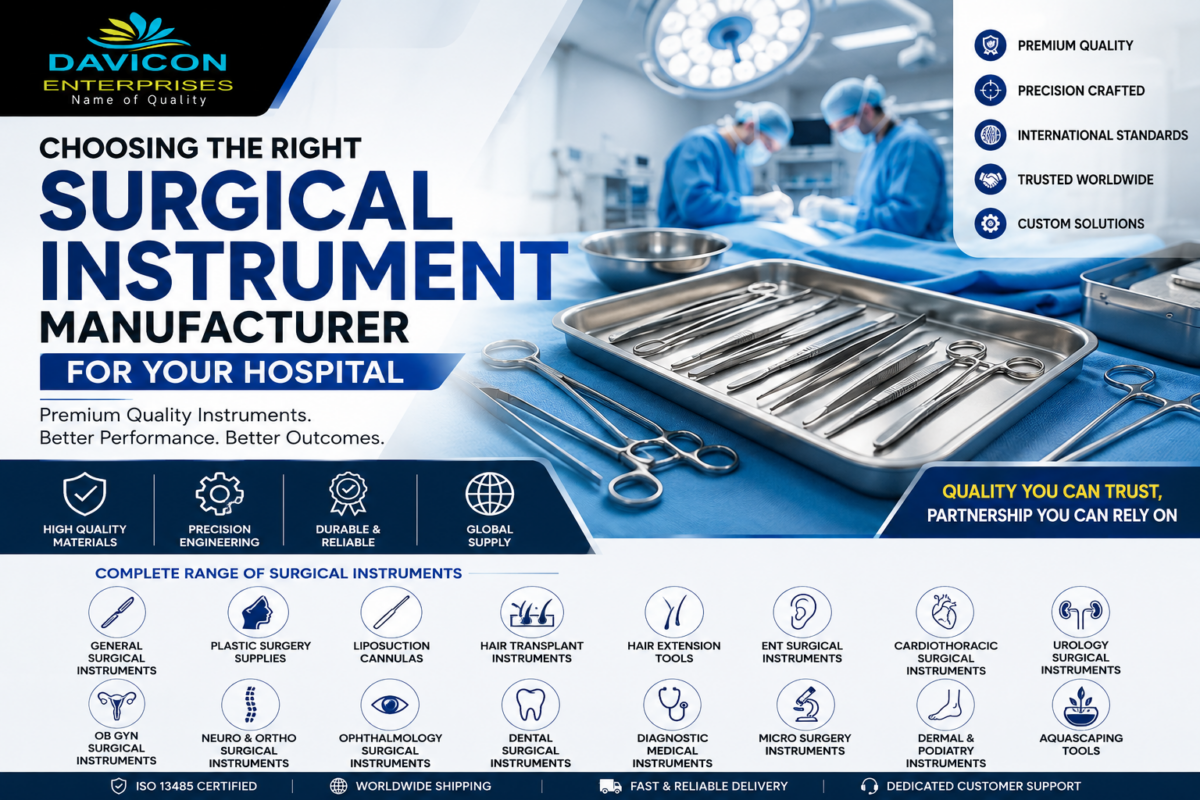
Hospitals, clinics, and healthcare providers depend on precision, durability, and reliability when purchasing medical equipment. Every procedure, whether routine or highly specialized, requires instruments that perform consistently and meet international quality standards. Therefore, choosing the right surgical instrument manufacturer for your hospital is one of the most important decisions healthcare organizations can make.
A trusted manufacturer does more than supply products. They become a long-term partner who supports patient safety, surgeon confidence, and operational efficiency. From General Surgical Instruments to specialized Micro Surgery Instruments, selecting the right supplier ensures that every surgical procedure benefits from dependable tools designed for accuracy.
This guide explains the essential factors hospitals should evaluate before partnering with a surgical instrument manufacturer while highlighting the importance of quality, certifications, customization, and product range.
Why Your Choice of Manufacturer Matters
Every surgical procedure relies on instruments that deliver precision and reliability. Poor-quality products can affect surgical performance, increase maintenance costs, and reduce instrument lifespan.
A reputable manufacturer invests in premium materials, skilled craftsmanship, and rigorous quality inspections. As a result, hospitals receive instruments that maintain their sharpness, corrosion resistance, and functionality even after repeated sterilization.
Moreover, experienced manufacturers understand the evolving needs of modern healthcare facilities and continuously improve their production processes.
Evaluate Manufacturing Experience
Experience reflects a manufacturer’s ability to produce instruments that meet international healthcare requirements.
Hospitals should work with manufacturers that have years of expertise in producing various categories of surgical instruments, including:
- General Surgical Instruments
- Plastic Surgery Supplies
- ENT Surgical Instruments
- Cardiothoracic Surgical Instruments
- Urology Surgical Instruments
- OB GYN Surgical Instruments
- Neuro and Ortho Surgical Instruments
- Ophthalmology Surgical Instruments
- Dental Surgical Instruments
- Diagnostic Medical Instruments
- Dermal and Podiatry Instruments
- Micro Surgery Instruments
Manufacturers with extensive industry experience understand surgical requirements and consistently deliver products that meet professional expectations.
Check International Quality Certifications
Quality certifications demonstrate that a manufacturer follows recognized production standards.
Before making a purchasing decision, hospitals should verify whether the manufacturer complies with internationally accepted certifications such as:
- ISO 13485
- CE Certification
- FDA registration where applicable
- Good Manufacturing Practices (GMP)
These certifications indicate that manufacturing processes follow strict quality control measures while ensuring product consistency.
Assess Material Quality
The durability of surgical instruments begins with raw materials.
Premium manufacturers commonly use high-grade German stainless steel or equivalent medical-grade stainless steel. These materials provide:
- Excellent corrosion resistance
- Superior edge retention
- Long service life
- Reliable sterilization compatibility
- High mechanical strength
High-quality materials significantly reduce replacement costs while improving surgical efficiency.
Review Product Range
Hospitals often prefer manufacturers capable of supplying multiple departments under one roof.
An established manufacturer should provide products for numerous medical specialties, including:
Plastic Surgery Supplies
Plastic surgeons require specialized tools designed for delicate cosmetic and reconstructive procedures. Manufacturers should offer complete plastic surgery sets along with precision accessories.
Liposuction Cannulas
Different procedures require different cannula designs. Hospitals benefit from manufacturers offering multiple sizes, lengths, and tip configurations suitable for body contouring procedures.
Hair Transplant Instruments
Hair restoration clinics require advanced punches, forceps, implantation devices, and extraction tools that maximize graft survival while reducing procedure time.
Hair Extension Tools
Some manufacturers also produce professional Hair Extension Tools for aesthetic clinics that offer cosmetic enhancement services alongside medical procedures.
ENT Surgical Instruments
Ear, nose, and throat procedures demand precision instruments capable of working within confined anatomical spaces. Manufacturers should provide forceps, retractors, scissors, suction tubes, and specialized ENT devices.
Cardiothoracic Surgical Instruments
Cardiac and thoracic surgeries require durable instruments capable of handling complex procedures. Hospitals should verify the availability of clamps, needle holders, retractors, and vascular instruments.
Urology Surgical Instruments
Urological procedures depend on specialized forceps, dilators, retractors, scissors, and minimally invasive surgical tools designed for precision.
Dermal and Podiatry Instruments
Dermatology and podiatry departments require curettes, nail nippers, scalpels, skin punches, and other precision instruments designed for skin and foot treatments.
OB GYN Surgical Instruments
Gynecological procedures require dependable instruments for examinations, deliveries, and surgeries. Hospitals should ensure the manufacturer offers complete obstetric and gynecological instrument sets.
Neuro and Ortho Surgical Instruments
Neurosurgery and orthopedic procedures demand instruments capable of handling highly specialized operations involving bones, joints, and delicate nervous tissue.
Ophthalmology Surgical Instruments
Eye surgeries require exceptional precision. Manufacturers should produce lightweight, finely balanced instruments suitable for microsurgical procedures.
Dental Surgical Instruments
Dental clinics require extraction forceps, elevators, scalers, curettes, needle holders, and implant surgery instruments that provide excellent grip and accuracy.
Diagnostic Medical Instruments
Hospitals also rely on diagnostic equipment such as reflex hammers, tuning forks, examination tools, and other diagnostic devices for routine patient assessments.
Micro Surgery Instruments
Microsurgical procedures require instruments engineered for exceptional precision under magnification. Manufacturers should maintain strict quality standards for these specialized products.
Evaluate Precision Engineering
Modern surgical instruments require advanced manufacturing technology.
Reliable manufacturers combine CNC machining, precision grinding, polishing, laser marking, and manual finishing to achieve consistent product quality.
Every instrument should undergo detailed inspection before shipment.
Examine Specialized Instruments
Hospitals frequently require unique instruments for specific procedures.
Examples include:
- Beebee scissors for delicate tissue dissection.
- Dermatom knife used in skin graft harvesting.
- Cushing Little Joker periosteal elevator for neurosurgical and orthopedic applications.
- Skin retractor for improved surgical exposure.
- Sternal retractor for cardiothoracic procedures.
A manufacturer capable of producing these specialized instruments demonstrates advanced engineering capabilities and broad surgical expertise.
Custom Manufacturing and OEM Services
Many hospitals prefer customized surgical instruments tailored to specific surgical techniques.
Leading manufacturers often provide:
- OEM manufacturing
- Private labeling
- Custom logo engraving
- Modified instrument designs
- Customized surgical sets
These services allow distributors and hospitals to build unique product portfolios while maintaining consistent quality.
Sterilization Compatibility
Hospitals repeatedly sterilize instruments throughout their service life.
Manufacturers should ensure their products withstand:
- Steam sterilization
- Autoclaving
- Chemical sterilization
- Plasma sterilization
Proper heat treatment and premium materials help instruments retain their performance after hundreds of sterilization cycles.
Reliable Global Supply Chain
Healthcare facilities cannot afford supply interruptions.
When choosing the right surgical instrument manufacturer for your hospital, evaluate their production capacity, inventory management, packaging quality, and worldwide shipping capabilities.
A dependable manufacturer delivers products on schedule while maintaining consistent product availability.
Technical Support and Customer Service
Excellent customer support strengthens long-term business relationships.
Hospitals should partner with manufacturers that provide:
- Fast quotation response
- Product consultation
- Technical documentation
- Warranty support
- After-sales assistance
- Flexible order quantities
Strong communication reduces procurement challenges and improves purchasing efficiency.
Why Long-Term Partnerships Deliver Better Value
Rather than changing suppliers frequently, hospitals benefit from developing lasting relationships with trusted manufacturers.
Long-term partnerships provide:
- Consistent product quality
- Stable pricing
- Faster production
- Customized solutions
- Better inventory planning
- Improved procurement efficiency
As healthcare demands continue evolving, trusted manufacturing partners remain valuable contributors to hospital success.
Final Talk
Selecting a dependable supplier involves much more than comparing prices. Hospitals should prioritize manufacturing expertise, certified quality systems, premium materials, comprehensive product ranges, and responsive customer support. By choosing the right surgical instrument manufacturer for your hospital, healthcare providers invest in patient safety, surgical precision, and long-term operational success. Whether your facility requires Plastic Surgery Supplies, General Surgical Instruments, Micro Surgery Instruments, Dental Surgical Instruments, or specialized products such as Liposuction Cannulas, working with an experienced manufacturer ensures reliable performance in every procedure. Choosing wisely today creates lasting value for surgeons, healthcare professionals, and patients alike.
Frequently Asked Questions
Why is choosing the right surgical instrument manufacturer important?
A reliable manufacturer provides high-quality instruments that improve surgical precision, patient safety, and long-term cost efficiency.
What certifications should hospitals look for?
Hospitals should look for ISO 13485 certification, CE marking, GMP compliance, and any applicable FDA registrations.
Which material is best for surgical instruments?
Medical-grade German stainless steel and premium stainless steel alloys offer excellent corrosion resistance, durability, and long service life.
Can manufacturers provide customized surgical instruments?
Yes. Many manufacturers offer OEM services, custom instrument designs, private labeling, and customized surgical sets.
What types of surgical instruments should a full-service manufacturer supply?
A comprehensive manufacturer should supply General Surgical Instruments, Plastic Surgery Supplies, ENT Surgical Instruments, Cardiothoracic Surgical Instruments, Urology Surgical Instruments, OB GYN Surgical Instruments, Neuro and Ortho Surgical Instruments, Ophthalmology Surgical Instruments, Dental Surgical Instruments, Diagnostic Medical Instruments, Dermal and Podiatry Instruments, and Micro Surgery Instruments.