Surgical Instrument Care and Handling
Care Guide for Surgical Instruments
Davicon Enterprises provides a complete guide for the proper cleaning, disinfection, and sterilization of surgical instruments, covering all three levels of surgical instrument care.
Cleaning
Cleaning removes dirt, debris, and biological material from surgical instruments. Instruments can be cleaned manually or mechanically using water combined with detergents or enzymatic cleaners.
Thorough cleaning is essential, as any remaining debris may interfere with subsequent disinfection or sterilization and can negatively impact instrument performance. Cleaning is the first and most critical step in the sterilization process and, in some cases, may be sufficient on its own.
Disinfection
Disinfection is classified into three levels:
- Low-Level Disinfection (LLD):
Eliminates most vegetative bacteria (excluding tubercle bacilli), lipid viruses, some non-lipid viruses, and certain fungi within 10 minutes. - Intermediate-Level Disinfection (ILD):
Destroys tubercle bacilli, mycobacteria, lipid-enveloped viruses, some non-lipid viruses, and fungal spores. - High-Level Disinfection (HLD):
Eliminates all microorganisms except large numbers of bacterial spores. The CDC recommends a 90-minute soak at 25°C for effective high-level disinfection.
Sterilization
Sterilization destroys all forms of microbial life. Some chemical sterilants may be used as high-level disinfectants when applied for shorter exposure periods. However, steam sterilization (autoclaving) or dry heat sterilization remains the preferred and most effective method for surgical instruments.
Manual Cleaning
Manual cleaning is required when mechanical cleaning systems are unavailable or when instruments are delicate, complex, require disassembly, or contain small lumens.
During manual cleaning:
- Wear heavy-duty rubber gloves, eye protection, a mask, and a protective apron.
- Use neutral pH detergents only.
- Acidic detergents or improper rinsing may damage stainless steel surfaces and cause black staining.
- Alkaline detergents may leave residues that cause brown staining and affect instrument function.
Cleaning Method
- Use soft plastic brushes for cleaning.
- Avoid steel wool, wire brushes, or abrasive materials that may scratch surfaces or dull cutting edges.
- Keep instruments submerged in water while scrubbing to prevent splashing contaminants.
- Clean all crevices, joints, teeth, and grooves thoroughly.
Rinsing
Rinse each instrument thoroughly under running water. Open and close hinged instruments—such as scissors, hemostats, and needle holders—during rinsing to ensure complete removal of detergent residue.
Inspection and Drying
Inspect each instrument visually to ensure it is free from stains and tissue residue. Check functionality:
- Scissors should open and close smoothly with proper blade tension.
- Forceps and tweezers must have aligned tips.
- Hemostats should lock and unlock easily.
- Needle holders should close fully; light passing through the jaws indicates wear.
- Cutting instruments should be sharp and free from chips or nicks.
After inspection, dry instruments with a soft, lint-free cloth to minimize corrosion and water spots. Apply a suitable instrument lubricant to hinged areas to maintain smooth operation.
For further assistance, please contact us at:
📧 info@daviconsurgical.com

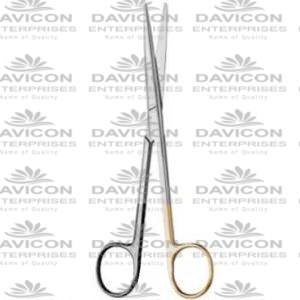 MAYO-LEXER SCISSOR