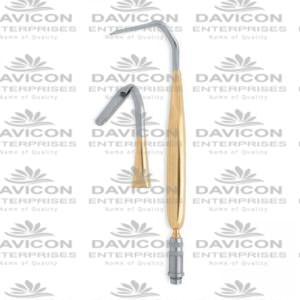
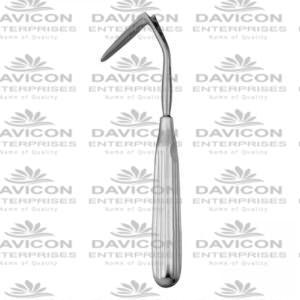
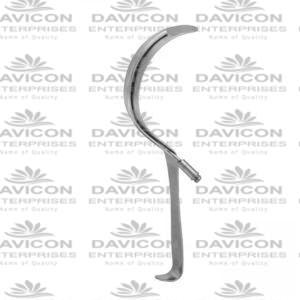
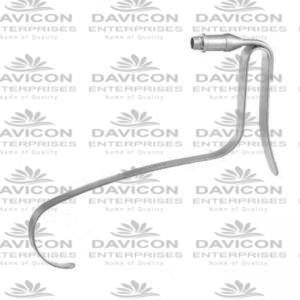
Nasal Retractor – Specialized Instrument for Nasal and ENT Surgical Access
A nasal retractor is a key instrument in ENT, rhinoplasty, and facial plastic surgery that allows surgeons to retract nasal skin, cartilage, and soft tissues, providing clear visibility and access to internal nasal structures. These tools ensure precise handling with minimal trauma, which is essential for delicate nasal procedures.
Nasal retractors are available in various sizes and shapes, depending on the depth, angle, and type of procedure being performed.
Types of Nasal Retractors Commonly Used
Vienna Nasal Retractor – Features wide blades and a finger ring for superior control
Cottle Nasal Retractor – Dual-ended and often used for septoplasty or submucous resections
Alar Retractor – Ideal for nostril or alar margin exposure in rhinoplasty
Aufricht Nasal Retractor – Features a long, curved blade perfect for open rhinoplasty
Freer and Killian Retractors – Used to lift and hold mucosal flaps during nasal or sinus surgery
Insulated Nasal Retractor – Suitable for use with electrosurgical equipment
These retractors may be manual or self-retaining, and many are available with insulated coatings for electro-surgical safety.
Applications in Nasal and ENT Procedures
Nasal retractors are indispensable tools for:
Cosmetic and functional rhinoplasty
Septoplasty and nasal valve surgery
Endoscopic sinus surgery (FESS)
Turbinate reduction
Alar base reduction or nostril shaping
Nasal trauma and fracture repair
ENT tumor or polyp removal
Their function is to expose the surgical site without compressing surrounding tissues, allowing the surgeon to work efficiently and safely.
Features of a Quality Surgical Nasal Retractor
High-grade stainless steel or titanium
Non-slip grip with ergonomic handles
Autoclavable and corrosion-resistant
Sharp yet smooth blade tips for soft retraction
Available in both insulated and non-insulated variants
Custom angles and blade widths to suit different nasal structures
Importance of Nasal Retractors in Rhinoplasty and ENT Surgery
Precise tissue handling and exposure are critical in nasal and ENT surgeries. A nasal retractor supports the surgeon by:
Creating a stable and open field of view
Minimizing tissue distortion and trauma
Improving procedural accuracy
Allowing symmetric correction and better outcomes