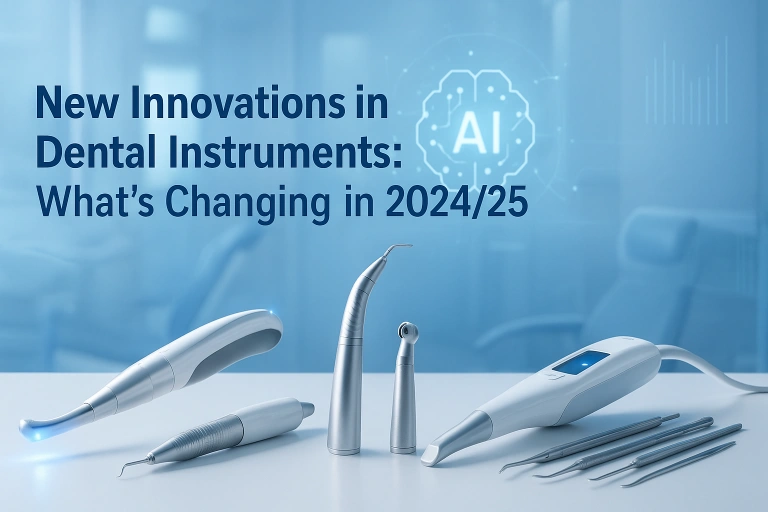
Dentistry has always relied on precision, and in recent years, technology has completely reshaped how dental professionals work. From routine cleanings to complex surgeries, dental instruments now combine smart features, digital connectivity, and ergonomic comfort to make procedures faster and safer.
As we move into 2024 and 2025, dental clinics around the world are experiencing a shift towards smart dental instruments and modern dental equipment designed to improve accuracy, hygiene, and patient comfort. These innovations are not just about upgrading tools they represent a smarter way of practicing dentistry. Whether it’s an AI-powered handpiece or an eco-friendly sterilization system, the latest developments are helping dentists deliver better results with less effort.
Innovation in dental instruments is also reducing human fatigue, enhancing visibility during procedures, and ensuring longer tool life through advanced materials. In short, the dental field is entering a new era where precision meets digital intelligence.
The Evolution of Dental Instruments Over Time
The journey of dental instruments from simple manual tools to advanced, AI-driven systems is a story of constant improvement. In the early days, dental tools were limited to hand-crafted metal instruments with very basic designs. They served their purpose but often lacked precision and comfort.
As technology progressed, modern dental instruments started incorporating better materials like stainless steel and titanium, ensuring strength and corrosion resistance. By the 2000s, digital dentistry tools such as ultrasonic scalers, high-speed handpieces, and digital radiography became essential in dental practices.
Today, the landscape has evolved even further. The focus has shifted towards smart dental instruments equipped with sensors, ergonomic dental instruments that reduce strain on dentists, and eco-friendly materials that support sustainable practices. These changes reflect not just innovation, but a deep understanding of both the dentist’s and the patient’s needs.
The evolution shows one clear trend: technology and comfort now go hand in hand in dentistry. Every new design or invention aims to make procedures more efficient, precise, and patient-friendly.
The Shift Towards Smart Dental Instruments
One of the most remarkable transformations in dentistry today is the rise of smart dental instruments. These next-generation tools combine precision mechanics with artificial intelligence (AI) and data connectivity to support dentists during procedures. Unlike traditional instruments, which rely entirely on manual control, smart devices analyze movement, pressure, and performance in real time — helping dentists achieve better accuracy and reduce procedural errors.
For example, AI-powered dental handpieces now come with torque sensors that automatically adjust speed and pressure according to the tooth’s condition. Similarly, smart dental mirrors equipped with tiny cameras and lights provide high-definition visuals that improve visibility during treatment. These innovations save valuable time while improving patient outcomes.
The integration of digital dentistry tools is also making a major difference. Devices that connect to cloud-based systems allow dentists to record, monitor, and review treatment data instantly. With these connected instruments, dental professionals can ensure consistency in quality, even across multiple branches or practitioners.
Moreover, smart scalers and endodontic instruments now come with programmable settings that adapt to the dentist’s hand movement, offering unmatched comfort and precision. In 2024 and beyond, these advancements are setting a new benchmark for how dental care should be performed efficient, data-driven, and minimally invasive.
In short, smart dental instruments are not just upgrades; they’re redefining how modern dental clinics operate. They represent a shift from manual craftsmanship to intelligent assistance, blending technology and human expertise for the best clinical results.
Ergonomic Designs: Enhancing Comfort and Control
Modern dental instruments are not just smarter they’re also more comfortable. The latest ergonomic dental instruments are designed to reduce hand fatigue and improve precision during long procedures.
Lightweight materials like titanium and reinforced polymers make tools easier to handle without losing strength. Anti-slip grips and balanced handles allow dentists to work with better control and less strain.
Custom handle shapes and adjustable angles are also becoming common, letting professionals choose tools that fit their hand and style perfectly. These design upgrades not only improve dentist comfort but also make treatments smoother and faster for patients.
In 2024 and 2025, ergonomics has become a core focus in dental instrument design ensuring every tool supports comfort, accuracy, and efficiency in the clinic.
Digital Dentistry and Connected Devices
Digital dentistry is reshaping how clinics operate. The integration of connected dental instruments allows dentists to work faster, more accurately, and with better patient data management.
Tools like smart handpieces, intraoral scanners, and digital imaging systems now connect directly to software that stores and analyzes treatment details in real time. This reduces errors, improves workflow, and helps dentists make data-driven decisions.
Cloud-based connectivity also lets professionals track maintenance schedules and instrument performance, ensuring reliability during every procedure.
In 2024 and 2025, digital dental instruments are no longer optional they’re becoming a core part of every modern practice, combining precision with smarter, connected care.
AI and Automation in Dentistry
Artificial intelligence is bringing a major shift to dental instruments and daily clinical work. With AI-powered dental tools, dentists can now analyze, diagnose, and perform treatments with greater accuracy and speed.
Modern robotic dental systems assist in surgeries, while AI algorithms interpret scans to detect cavities or gum issues early. Some smart dental instruments even adjust their motion or pressure automatically, ensuring consistent precision during procedures.
Automation is also improving maintenance systems can track sterilization cycles, calibrations, and tool lifespan automatically.
In 2024 and 2025, the mix of AI and automation is helping clinics save time, reduce human error, and provide safer, more personalized dental care.
Sustainability and Eco-Friendly Innovations
As healthcare becomes more environmentally conscious, dental instrument manufacturers are focusing on eco-friendly solutions. Modern tools now use recyclable materials, energy-efficient components, and low-waste packaging.
Reusable dental instruments are replacing single-use plastics, reducing waste without compromising hygiene. Some sterilization units are also designed to save water and energy, aligning with green clinic practices.
Sustainable production methods like 3D printing with biodegradable materials—are helping the industry lower its carbon footprint.
In 2024 and 2025, sustainability isn’t just a trend; it’s becoming an essential part of modern dental equipment design and production.
Instrument Sterilization and Hygiene Innovations
In modern clinics, sterilization and hygiene are just as important as precision. New dental instrument sterilization systems are now faster, safer, and more energy-efficient than traditional ones.
Advanced autoclaves with smart sensors monitor pressure and temperature automatically, ensuring complete sterilization with minimal effort. Some instruments are even built with self-cleaning surfaces that resist bacterial buildup, reducing infection risks.
UV disinfection and automated cleaning stations are also becoming common, providing an extra layer of safety for both patients and staff.
In 2024 and 2025, innovation in dental hygiene technology ensures cleaner instruments, shorter downtime, and better compliance with global health standards.
Training and Adaptation to Modern Instruments
With the rise of smart and digital dental instruments, proper training has become essential. Dentists and assistants must learn how to use, maintain, and integrate these advanced tools into daily procedures.
Many institutions now include digital dentistry training in their programs, while clinics are adopting short courses and online workshops to stay current. Virtual reality (VR) and simulation tools also help professionals practice real-life procedures using modern equipment.
Understanding how to calibrate, sterilize, and store these instruments properly ensures long-term efficiency and safety.
In 2024 and 2025, clinics that invest in continuous training are seeing smoother workflows, higher accuracy, and greater patient trust proving that technology works best when paired with skill and knowledge.
Impact of Innovation on Dental Practice Efficiency
The latest dental instrument innovations are transforming how clinics operate. Smart handpieces, digital scanners, and AI-based systems save time while improving precision. Procedures that once required multiple visits can now be completed faster and with greater accuracy.
Ergonomic and modern dental instruments also reduce fatigue, allowing dentists to maintain steady focus throughout the day. With connected devices and automated sterilization, clinics spend less time on maintenance and more on patient care.
These advancements not only boost productivity but also improve patient comfort and satisfaction the two most important factors in a successful dental practice.
In 2024 and 2025, innovation has become the foundation of efficient, patient-centered dentistry.
Challenges in Adopting New Dental Technologies
While modern dental instruments bring major benefits, their adoption isn’t without challenges. The most common issue for clinics is the high cost of advanced tools and equipment. Smaller practices often find it difficult to upgrade due to tight budgets.
Another challenge is training and adaptation learning how to use digital systems, AI tools, and connected devices effectively takes time. There’s also the concern of maintenance and software updates, which require consistent support.
Despite these hurdles, the long-term advantages better accuracy, faster treatments, and improved hygiene make innovation a worthwhile investment. As technology becomes more accessible, these challenges are expected to fade, making smart dental instruments the new standard across clinics.
Future Outlook: What to Expect Beyond 2025
The future of dental instruments looks smarter, faster, and more automated than ever before. By 2026 and beyond, AI-driven systems and robotic dental tools will likely play a bigger role in surgeries, diagnostics, and even preventive care.
We can also expect fully digital dental ecosystems, where connected devices share real-time data between clinics, labs, and patients for more personalized treatments. Nanotechnology and biocompatible materials will further enhance precision, comfort, and healing.
Sustainability will remain a key focus, pushing manufacturers to use recyclable materials and energy-efficient production methods.
Overall, the next era of dentistry will blend technology, ergonomics, and eco-innovation, creating a future where every dental tool works smarter not harder.
Conclusion
The world of dental instruments is evolving faster than ever. From smart handpieces and AI-assisted tools to ergonomic designs and eco-friendly materials, every innovation aims to improve precision, comfort, and patient safety.
For dentists, staying updated with these advancements means offering better care and running more efficient clinics. While challenges like cost and training remain, the long-term rewards—accuracy, speed, and trust make innovation essential.
As we move beyond 2025, one thing is clear: the future of dentistry lies in smarter, sustainable, and more connected dental instruments that redefine how professionals care for their patients.